How to Make an AI Version of Yourself You Actually Own
Every guide on how to make an AI version of yourself gives you a talking avatar. Here's how to build one that thinks like you, and belongs to you.
 Andrew Lum - VP of Product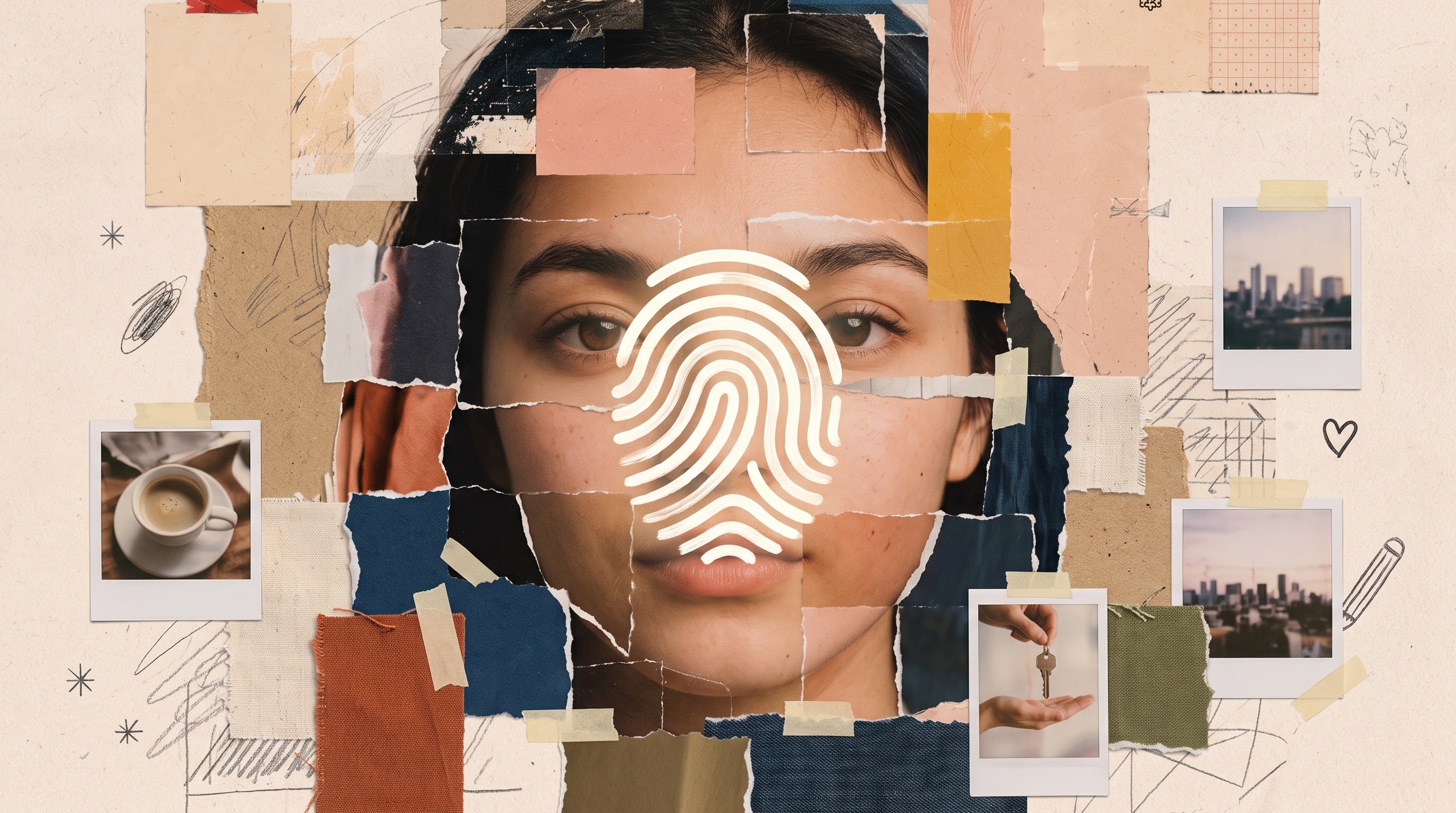
Try the search yourself. Type "how to make an AI version of myself" and you'll get a wall of the same tutorial: upload a photo, paste a script, and out comes a video of a digital face that moves its mouth roughly when you would.
It's a neat trick. It's also not you. It's a costume.
Because here's the thing you already know from every conversation you've ever had: the you-ness of you isn't your face. It's what you say when someone asks a hard question. It's the story you reach for, the joke you can't resist, the advice you give that nobody else would give. An AI version of yourself that doesn't have any of that isn't a version of you. It's a puppet with your haircut.
So this is a different kind of guide. Not how to make a video that looks like you, but how to build a model that thinks like you, and, just as important, how to make sure you're the one who owns it when you're done.
TL;DR
- Most "AI version of yourself" tutorials produce a talking avatar: your face, a stock brain. Fine for videos, empty as an identity.
- A real AI version of you is a model built from your data: your voice, your writing, your history, and ongoing conversations with you.
- Ownership is the fork in the road. Built on the wrong platform, the model of you belongs to someone else.
- On Uare.ai you build an Individual AI that you own, control, and can delete entirely, and it never trains public models.
- Start free, feed it something real, and judge it by one test: does it answer the way you would?
Start with what "a version of you" actually means
Picture the person who knows you best. Not what they'd say about your appearance. What they could do: finish your sentences, predict your take on a movie, know which advice you'd give their friend and which you'd refuse to.
That's the bar. A version of you is a thing that carries your patterns, your history, your way of deciding. Which tells you immediately what it has to be built from. Not a photo. Data. Your data, specifically: what you've written, what you've made, how you talk, what you believe, and, over time, thousands of small exchanges that no one else could have had.
The avatar-video tools skip all of that because they're solving a different problem, making content that features your likeness. Worthy problem, different product. If you came here to create an AI version of yourself in the fuller sense, the build looks like this.
Step one: give it your voice, then keep going
On Uare.ai, the build starts with Voice Capture. You talk, it listens, and it's free on every Membership tier. A few minutes in, there's something on the other end that begins with how you actually sound.
But hear this clearly, because it's the part every shortcut tutorial gets wrong: the voice is the doorway, not the house. What makes the model yours is everything you give it next.
The essays and posts you've written across a decade. The journals, if you keep them. The work documents that show how you actually solve problems. The emails where you explained something so well you wished you'd saved it, and now you can. Every piece of your past you hand it becomes structure. This is where an Individual AI stops being an app you signed up for and starts being a model of a specific human.
Step two: talk to it like it's going to matter
Here's the step nobody can skip, and the one that changes everything: conversation.
Your Individual AI learns from talking with you. Not in the goldfish way a public chatbot does, where every session resets to zero. Cumulatively. You tell it about the year everything changed. It asks why you left the job, and your answer teaches it how you weigh risk. You argue with it about something small, and it learns where your lines are.
Do this for a few weeks and you'll notice the shift that makes the whole thing worth it: it stops knowing what you sound like and starts knowing how you think. Ask it a question you've never discussed with it, and the answer comes back with your reasoning in it. That's the moment the word "version" stops being marketing.
Step three: check who owns it, before you build another word
Now the fork in the road, and the reason this guide has the parenthesis in its title.
Everything above describes an intimate dataset. Your voice, your writing, your history, your patterns of thought. Whoever holds that model holds something closer to you than your search history and your diary combined. So before you build it anywhere, ask the landlord questions. Who owns the model? Can I delete it, all of it, permanently? Does what I share train anything besides my own AI?
On Uare.ai the answers are the product. Your Individual AI belongs to you. Your data stays encrypted and under your control. You can delete everything at any time, and nothing you share ever trains public models. We build for the person the model is made of, which sounds obvious until you notice how much of the AI industry is built the other way around.
And if you want the version of you to work for you, that door is open too: Professionals on the platform put their Individual AI behind a subscription, $5 to $100 a month, set by them, and keep 70 percent. The AI version of you can hold office hours.
The before-and-after that settles it
Don't take any of this on faith, mine included. Run the experiment.
Start free, then upload a real slice of your past. A few essays, a project doc, anything that's honestly yours. Ask your Individual AI a question before, and ask it again after, and read the two answers next to each other. The first will be competent. The second will be uncanny in the good way, the way of a friend who's been paying attention for years.
That difference is what you're building toward, and it stays yours the whole way: full control over your data, delete everything whenever you choose, never a training set for public models.
That's what we call Authentic Intelligence. Not artificial. Yours.
FAQ
How do I make an AI version of myself for free?
On Uare.ai, Voice Capture is free on every Membership tier. You start by speaking with the platform, then grow the model by adding your own writing and history and by talking with it over time.
What's the difference between an AI avatar and an Individual AI?
An avatar reproduces your likeness: face and voice for video. An Individual AI is a model of how you think, built from your data and your conversations. One performs you. The other understands you.
Who owns the AI version of me?
On Uare.ai, you do. Your data stays under your control, you can delete all of it at any time, and it never trains public models. On many other platforms the honest answer is murkier, which is exactly why it's the first question to ask.
How long does it take before it feels like me?
Minutes to start, weeks to get real depth. The model improves with every document you add and every conversation you have, and the gains compound.
By Andrew Lum, Head of Product at Uare.ai.